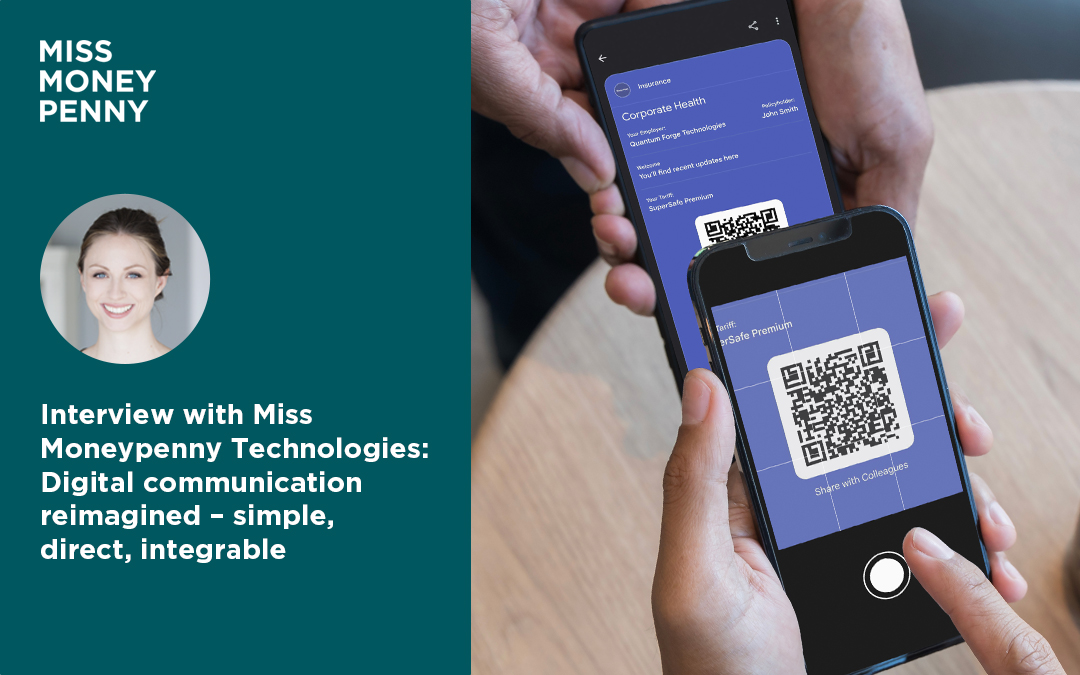
Miss Moneypenny Technologies recently closed a funding round to accelerate the growth of its Wallet Studio platform - A success story that not only impresses, but also arouses curiosity. With Wallet Studio, the start-up has launched a technology that rethinks digital communication in the insurance industry - simple, direct and without IT hurdles. We spoke to co-founder and CEO Anna Bojic about the goals following the financing round, the role of contextual communication, the use of wallets as a new customer access point and how insurers can create effective touchpoints despite a shortage of specialists.
Congratulations on this really impressive financing round! Can you tell us how you plan to use this investment to revolutionize the future of digital communication? What particular impact can we expect for the insurance industry?
 Thank you very much, we are also very proud that we have succeeded so quickly in this market! The funding gives us the means to continue developing precisely where digital communication is still reaching its limits today. Many insurers have invested a lot in recent years and established extensive ecosystems with portals, apps and CRM systems, but there is a lack of a direct, frictionless channel that really reaches customers and brings all these systems together in one place. This is exactly where Wallet Studio comes in. Our platform creates a direct, permanently available touchpoint via Apple Wallet and Google Wallet - without any additional app download, registration or login. This reduces process costs, increases the use of existing services and creates proximity where there was previously distance.
In recent years, we have developed Wallet Studio in such a way that insurers can get started with minimal IT effort. This relieves the burden on technology teams and accelerates real digital transformation. We are now making targeted investments to support our partners' existing ecosystems even more - as well as in AI-supported tools that make it even easier for specialist departments to set up and optimize communication. Our goal is to enable the insurance industry to exploit the full potential of this powerful technology with very little effort.
Your wallet solutions enable companies to communicate directly with customers - without having their own app. Can you give examples of how this technology is already improving the customer experience and process efficiency in the insurance industry?
Our digital insurance cards complement existing systems such as portals or call centers and existing services offered in apps. They close the gap in customers' everyday lives and create a simple, barrier-free communication interface. In the automotive sector, for example, insurers use Wallet Studio to automatically remind customers to change their winter tires or send a warning if hail is imminent. This reduces claims and gives customers the feeling that their insurer is there when it matters.
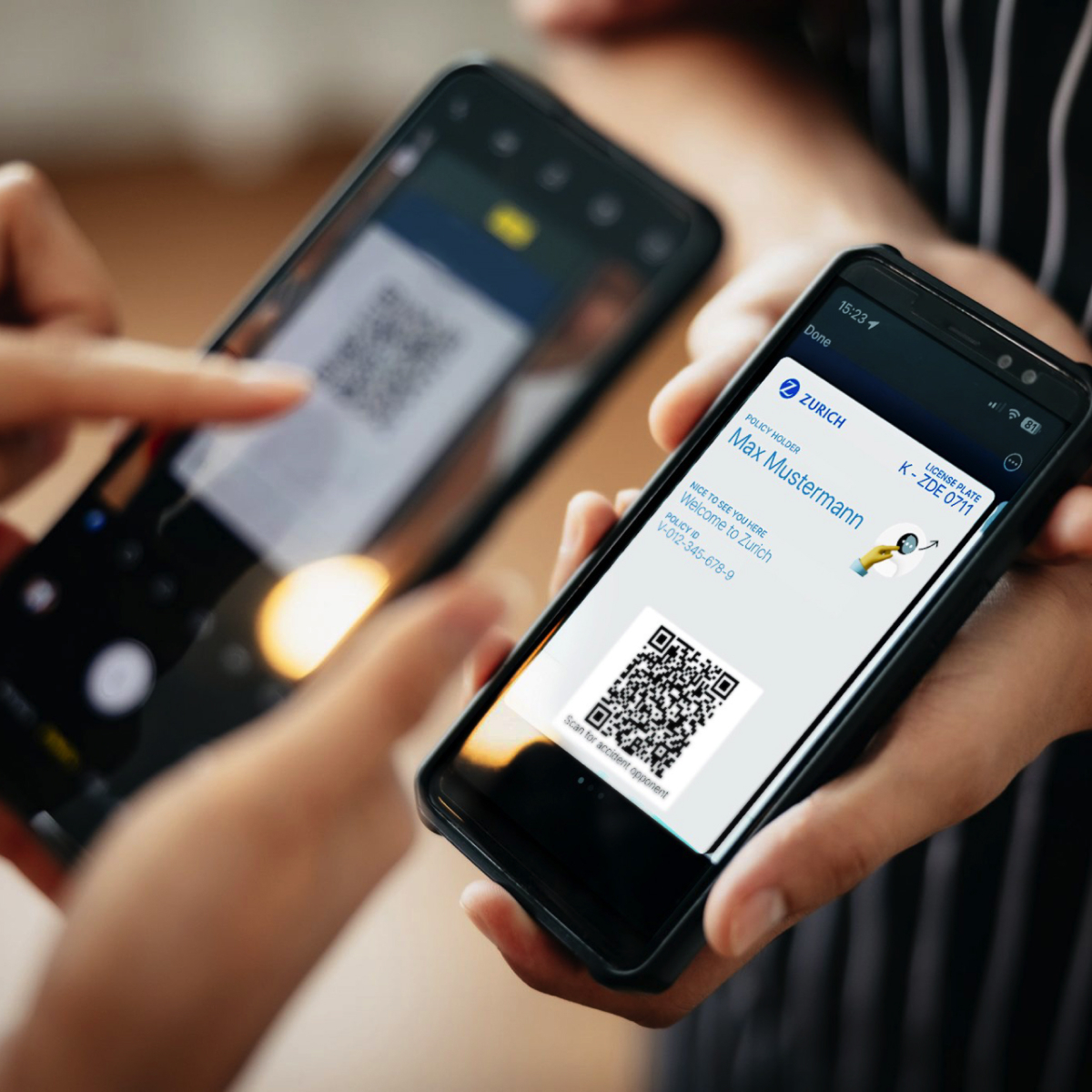
In the event of a claim, the digital insurance card makes it possible to immediately pass on your own insurance data to those involved in the accident and to enter the claims process digitally. No waiting, no uncertainty, no chaos, just easy access, simple provision of information and proactive communication and process control. And the call center is deliberately involved where customers have something that no bot or digital interface can replace: human warmth.
Another example from the travel sector: many insurers offer medical assistance abroad. But the services are hardly used because customers can't find them in an emergency. With the Wallet card, they are available with a tap, at exactly the right moment and without any technical hurdles. This makes communication suddenly effective and reduces costs at the same time.
The path from the idea to the successful implementation of a product is certainly full of challenges. Can you tell us about a particular challenge or a decisive event that shaped you as a team? How did you overcome this situation?
A key challenge was not only to build a good technology, but also a solution that works in the real world of insurers. We recognized early on that technical departments are often overloaded and that specialist departments are motivated and full of ideas, but that these often cannot be implemented quickly enough. Fast testing, learning, adapting? Hardly possible. The dynamics are lost.
 In addition, many companies are in the middle of converting their existing systems. They are then often told that they cannot act again until the new core system is in place. This can take years. Or develop in a direction that has to be corrected again later. This is a real problem for specialist departments that want to solve specific challenges and is a dangerous hurdle for a start-up's business model.
That's why we built Wallet Studio in such a way that specialist departments can start and scale independently, even in collaboration with other teams. We wanted to permanently eliminate the recurring hurdle of „We'd like to launch faster, but we don't have the IT capacity“. The result is a tech-free launchpad that some of our customers have been using successfully for years, both for quick pilots and for large-scale rollouts.
Breaking out of the logic that B2B SaaS always starts with a complex API connection was a mindshift. And it is precisely this change in perspective that shapes our entire way of thinking today: how can we make things radically simpler without sacrificing impact
What trends and technologies do you see for the coming years? How is Miss Moneypenny Technologies preparing for these challenges and opportunities?
One clear trend is the expectation of communication: it should be contextual, relevant and in real time, reduce complexity and simplify processes. At the same time, we are observing that it is becoming increasingly difficult for many companies to organize this communication effectively. The shortage of specialists is constantly increasing. Resources in specialist departments are limited and requirements are increasing.
We are therefore making targeted investments in AI-supported functions that help specialist departments to create, play out and develop content more quickly. This is done on the basis of proven and learning patterns, but always in such a way that professional control and responsibility for content are retained. The aim is to achieve a high impact with as little effort as possible.
We also see great potential in networking: in future, Wallet Studio will interact even more closely with inventory systems, portals and messaging solutions to enable consistent, data-based communication and process control across all channels.
What would you recommend to (prospective) founders who want to gain a foothold in the tech and insurance industry? How important are innovation hubs in this context and how do such communities affect scaling? And are there any specific learnings that were particularly valuable for you?
If you want to make a difference in the insurance industry, you need patience and a genuine interest in the processes, mindsets and challenges of this complex sector. It's not enough just to deliver good technology. You need to understand how decisions are made, how projects work and what compromises are necessary.
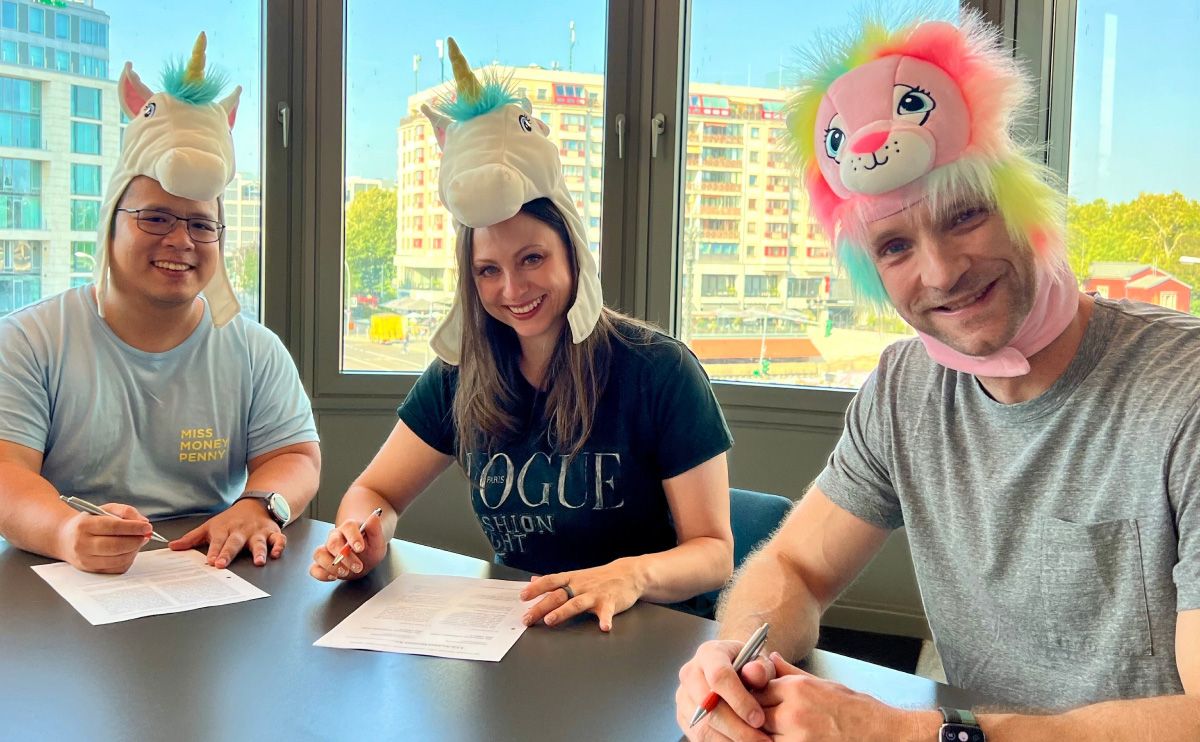
 Innovation hubs and communities such as InsurLab play a central role in this. Without the InsurLab, Wallet Studio would not exist in this form. Combining pilot projects with mentorship was the key to our success. Our mentors came directly from the field, brought a view from the inside, were willing to work together to create something new and really put it into practice.
We were very fortunate to start our first projects directly with R+V Versicherung and Rheinland Versicherung. This collaboration on an equal footing not only led to our first successes, but also to a deep understanding of what the industry really needs. On this foundation, we were able to build something that works for many insurers today. Without InsurLab, which supported us with structure, knowledge and real backing, this path would not have been possible.
Our biggest learning? If you are prepared to really get involved in the industry, the result is not just a product, but a partnership, sometimes even a friendship. And with it the chance to change the industry together.
Anna Bojic, thank you very much for the interview - we wish you continued success!

 German
  English